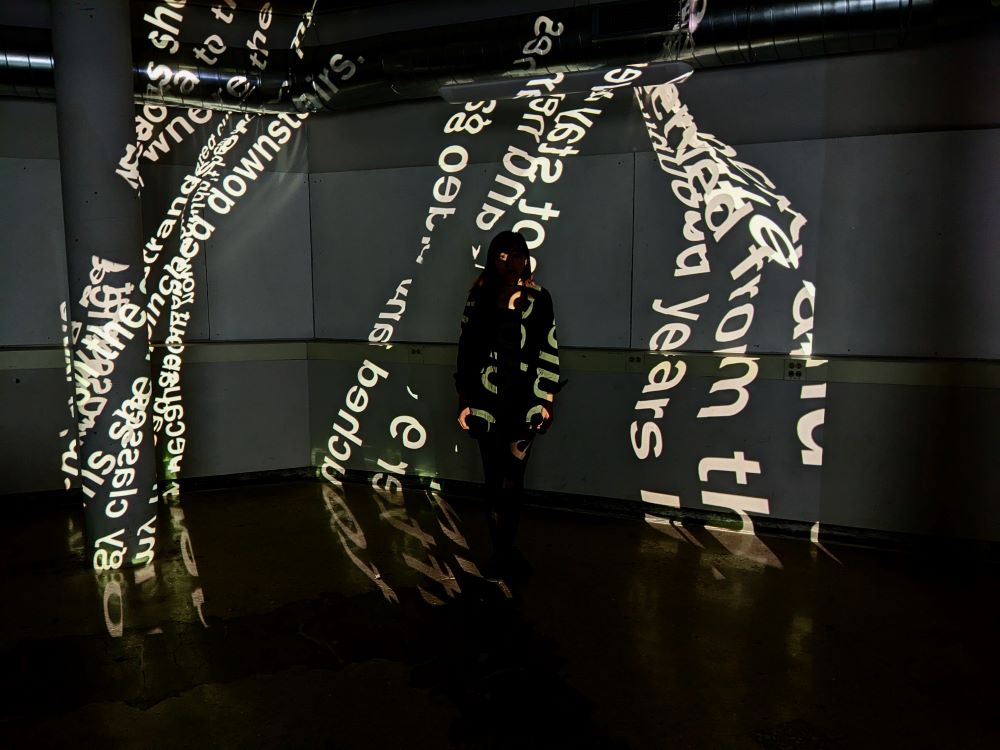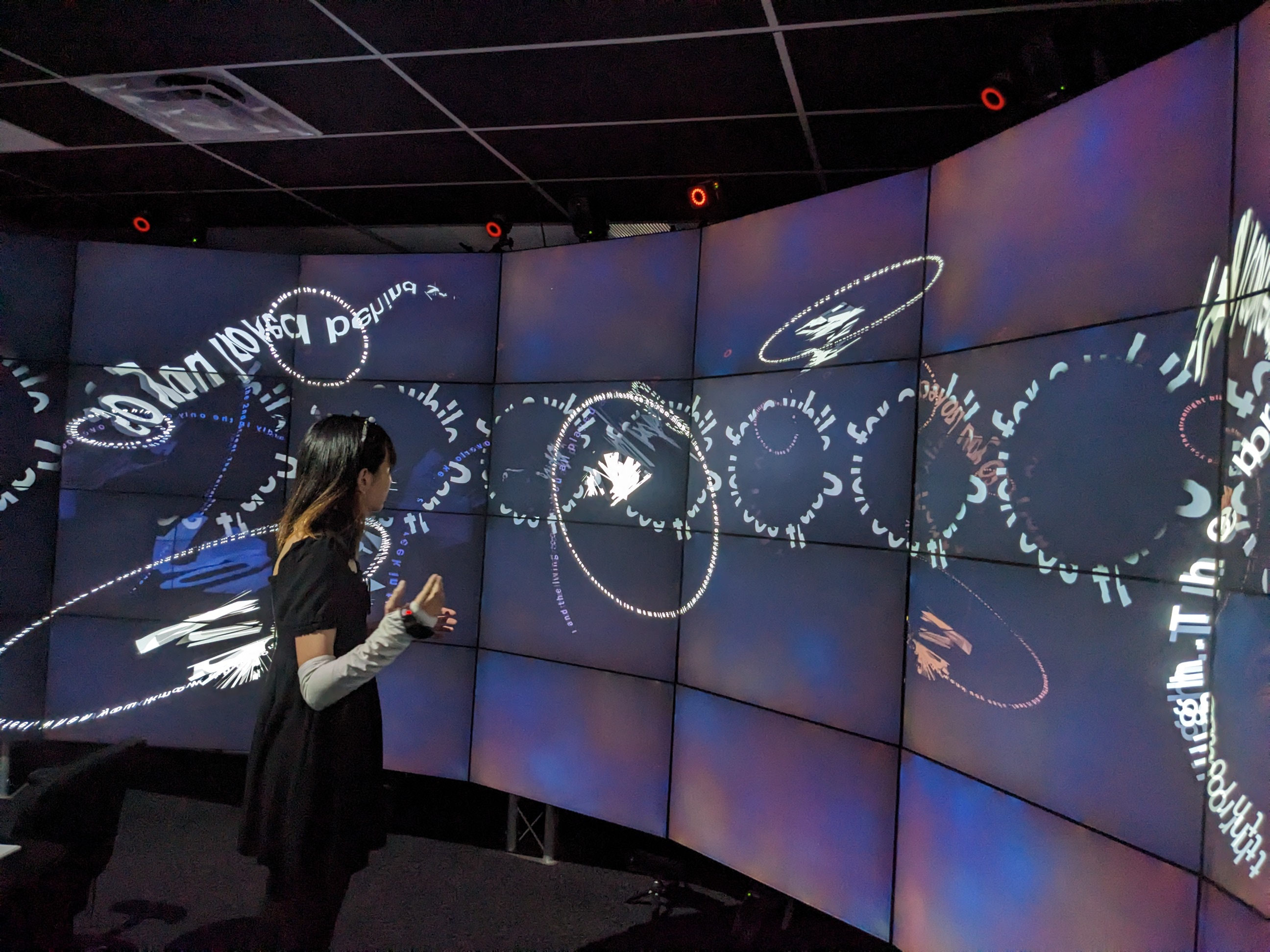
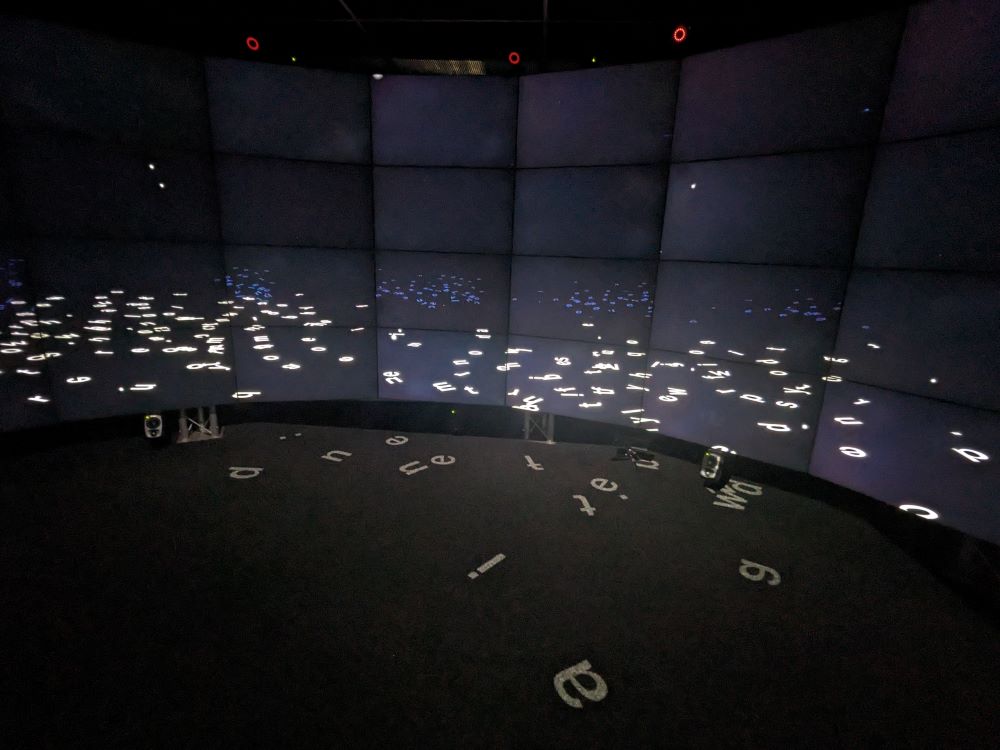
An Elegy for the Departed is an interactive virtual reality environment developed for the CAVE2TM immersive stereoscopic hybrid-reality visualization system, combining physical computing, gesture tracing, interactive typography, and creative writing.
To escape, to free, to grow, to part, to forget, to recall, is to reorganise and make choices about what to let go of and what to hold on to, and it is to physically leave a place and move far away without knowing if you’ll find a way back.
Writing is my emotional conduit, for the moments when strong emotions have nowhere else to flow: whether it’s journaling, composing bad poetry, scribbling on an aeroplane sickness bag, jotting down stream of consciousness, or repeating phrases in my head while wandering around unfamiliar streets. An Elegy for the Departed is my poetic, perhaps futile attempt to consolidate and immortalise the transitory states of life.
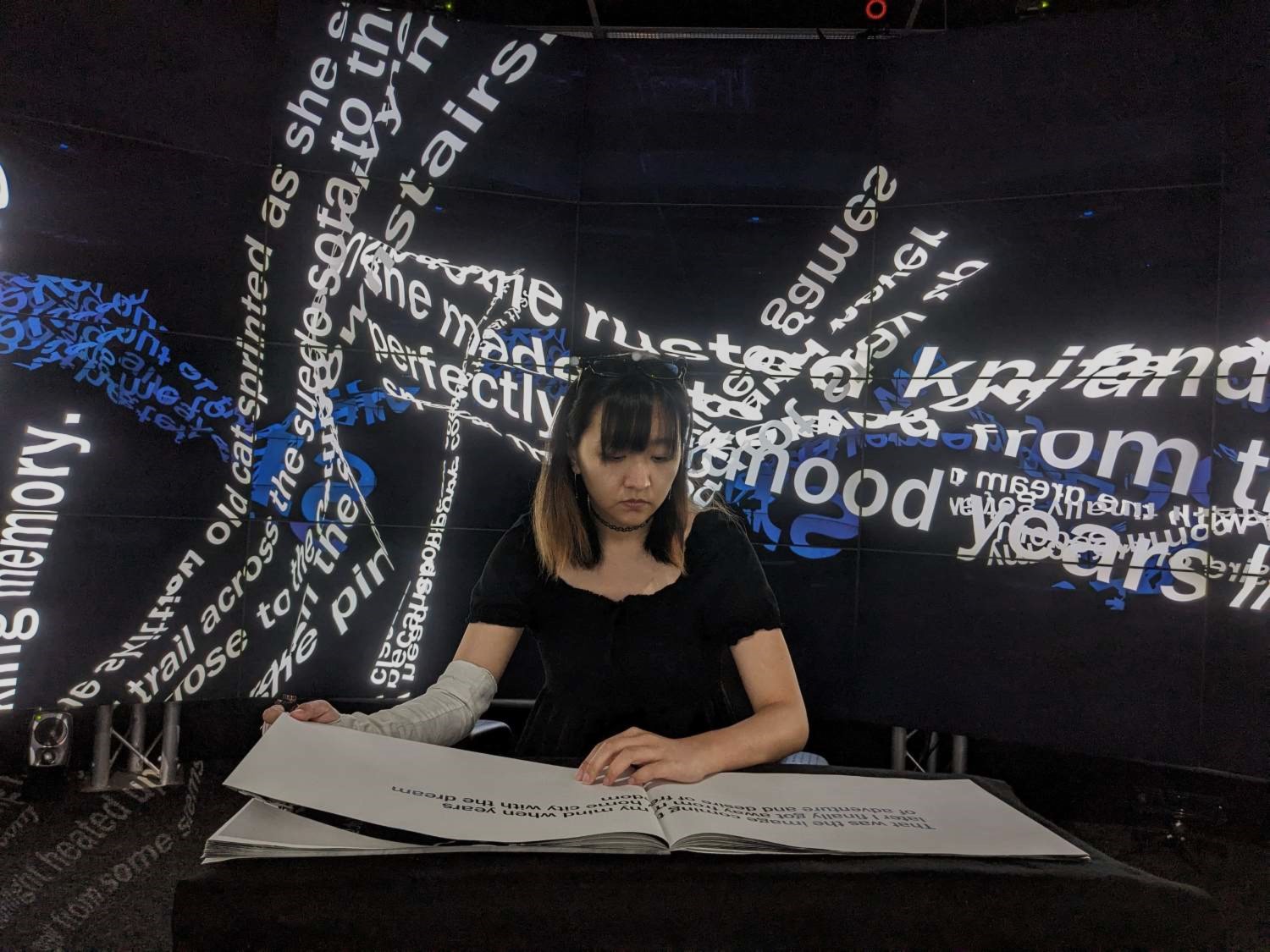
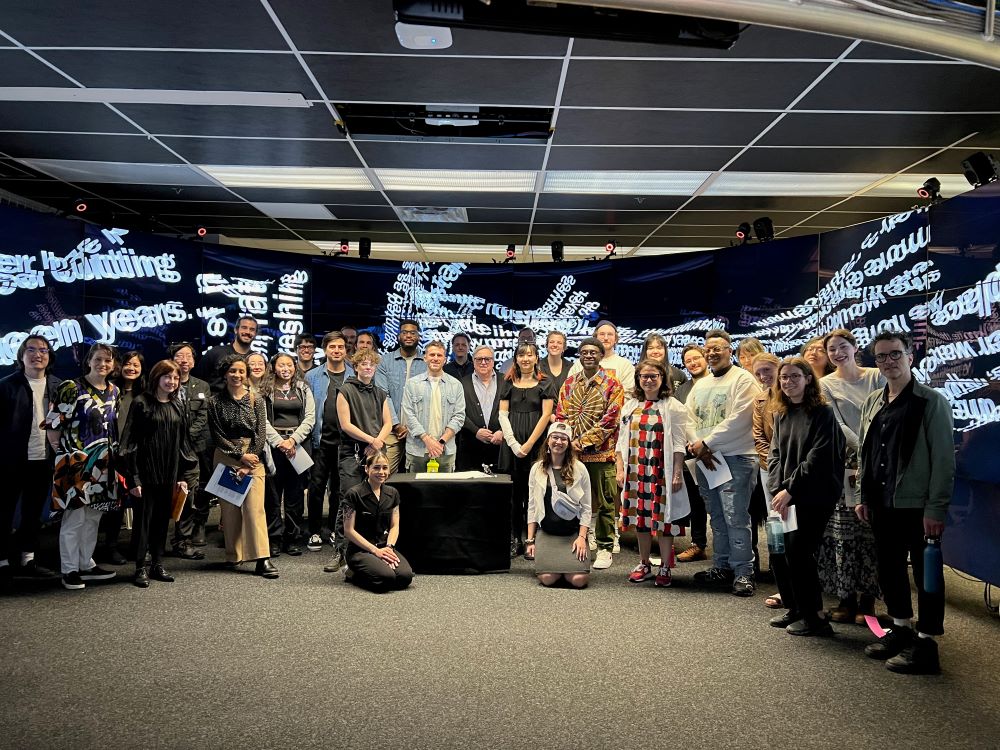
The project culminated into an audiovisual performance of my original writings, where the audiences were invited into the immersive space to observe me demonstrating my custom wearable device in real-time.
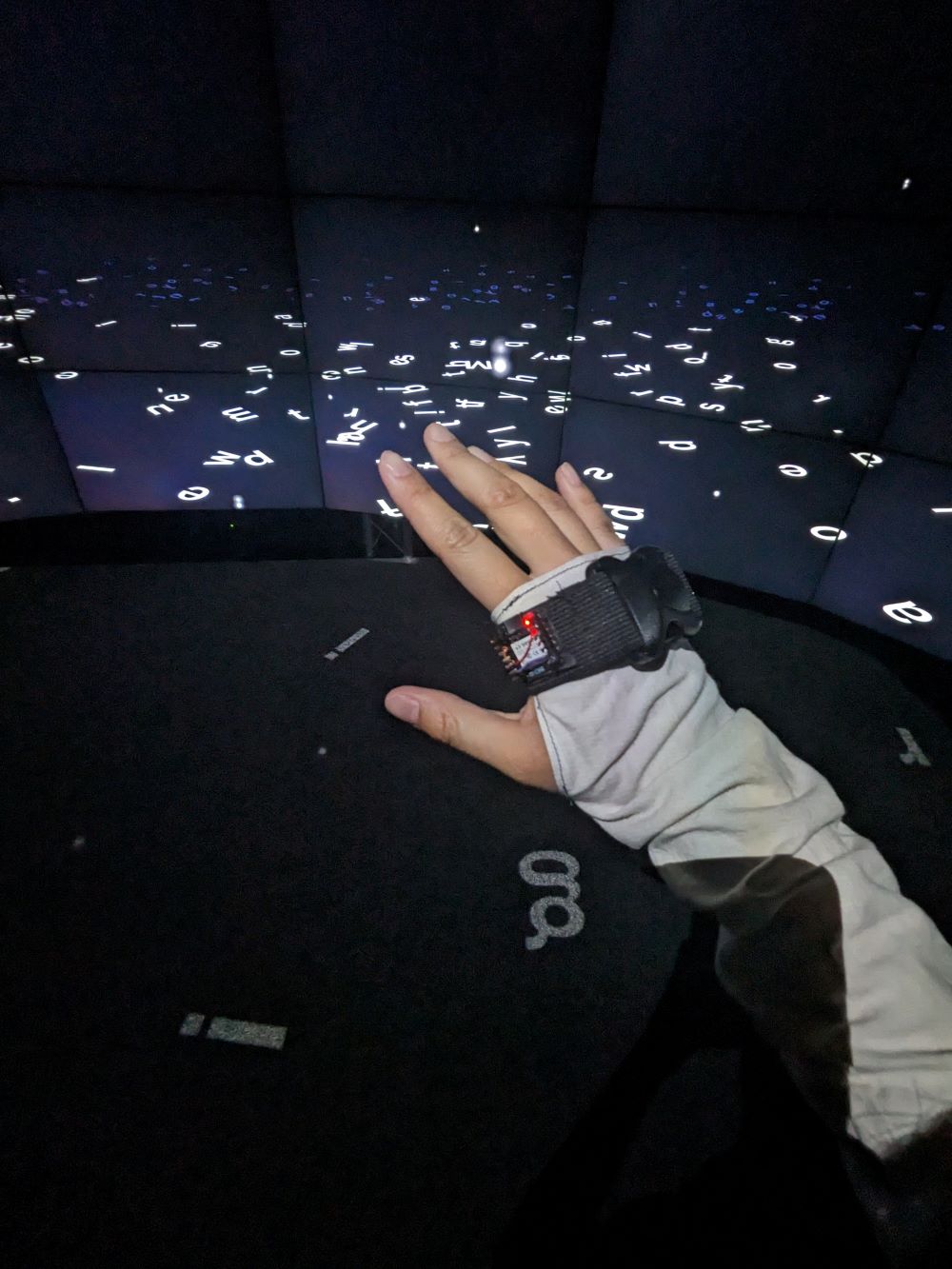
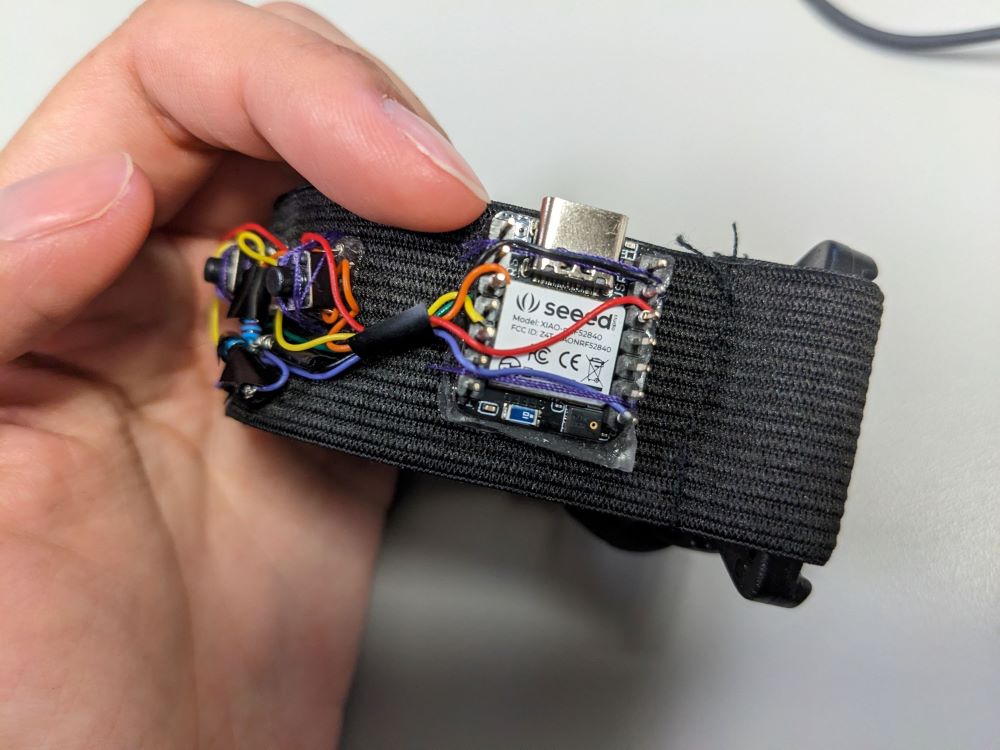
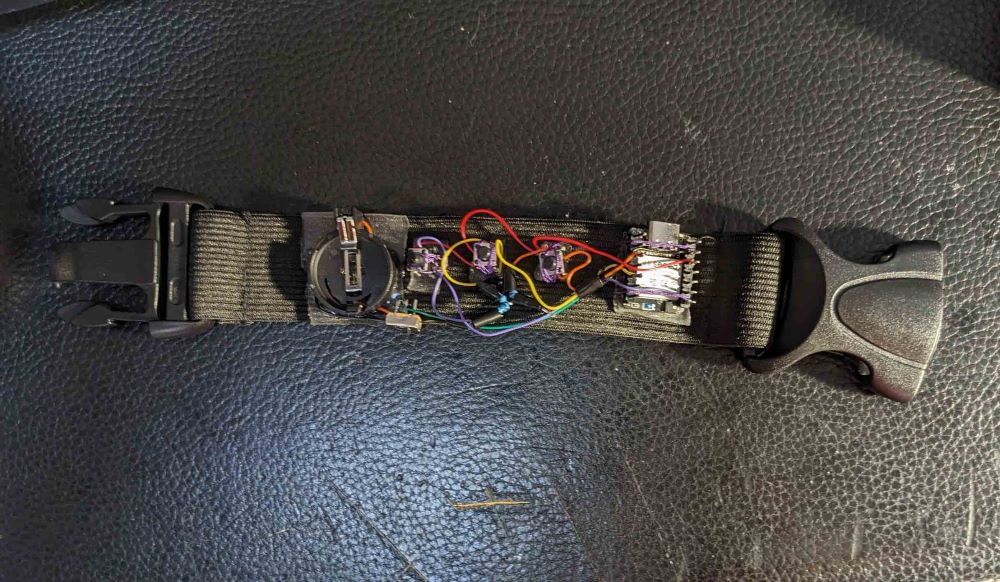
The device is a bracelet powered by Seeed Studio XIAO nRF52840 Sense, which has a gyroscope unit that collects the velocity and acceleration data of my hand gestures. With the bracelet on my right hand during the performance, the typographic motions in the scenes built in Unity respond to my body language.
Additionally, the CAVE2TM implements a head-tracking system, so the audience members can see from my perspective as I physically move through the space.
The three pieces of writing selected are my poetic interpretation of departure, wrestling with the anxiety of relocating to multiple places throughout my life. The chapters, Cloth, Bike, and Wind, correspond with the three VR scenes of black and white typography.
“… when the television only played dramas which I found always have the similar storylines repeating, repeating, repeating, and repeating causing me to never watch those again since I moved out of the place…”
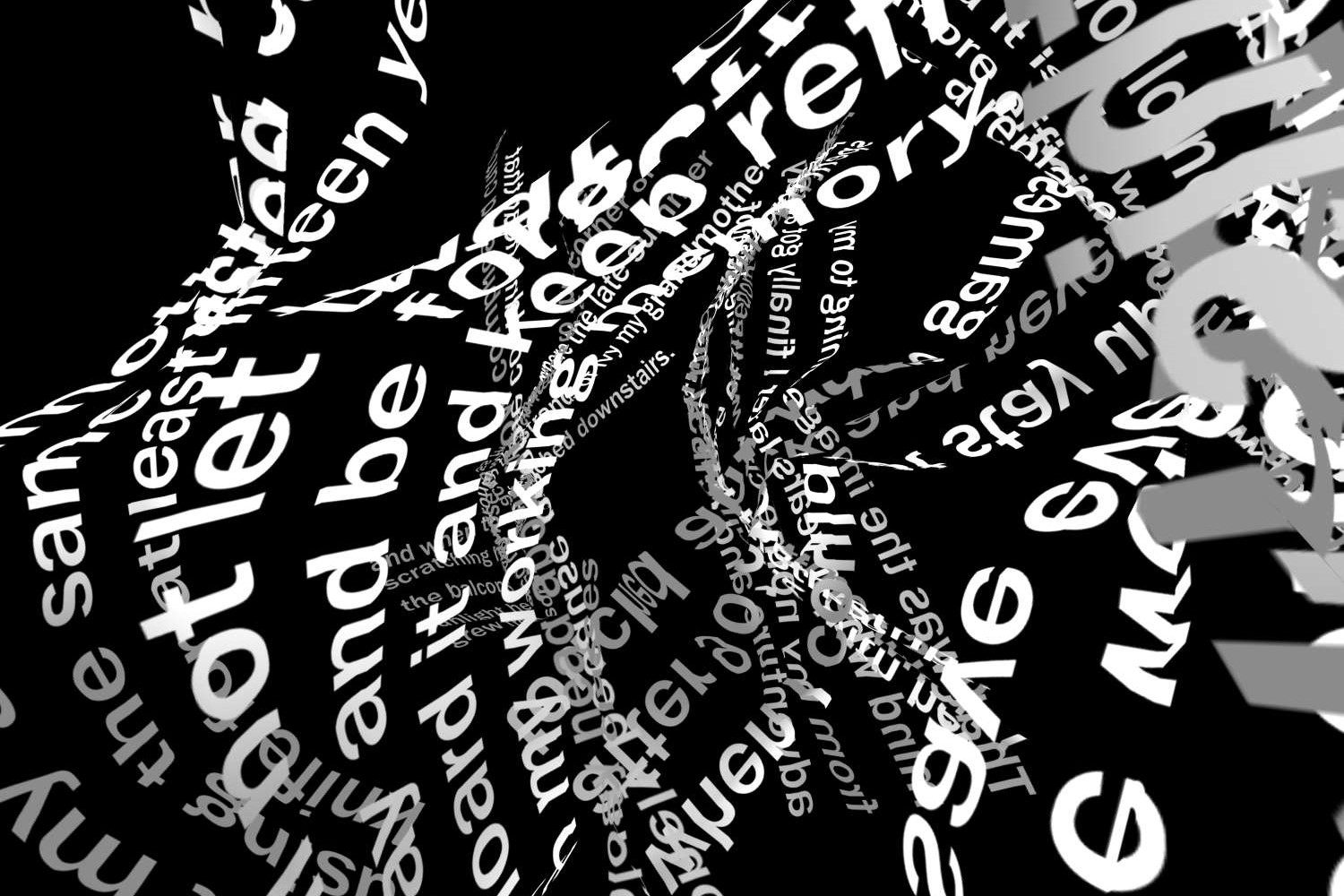
The first chapter Cloth is a creative non-fiction about the memories I treasure.
“… It felt out of control. It felt like when they visited you but couldn’t come upstairs because of the memories. That was in the house on 2nd Street. The entrance was hidden on the side…”
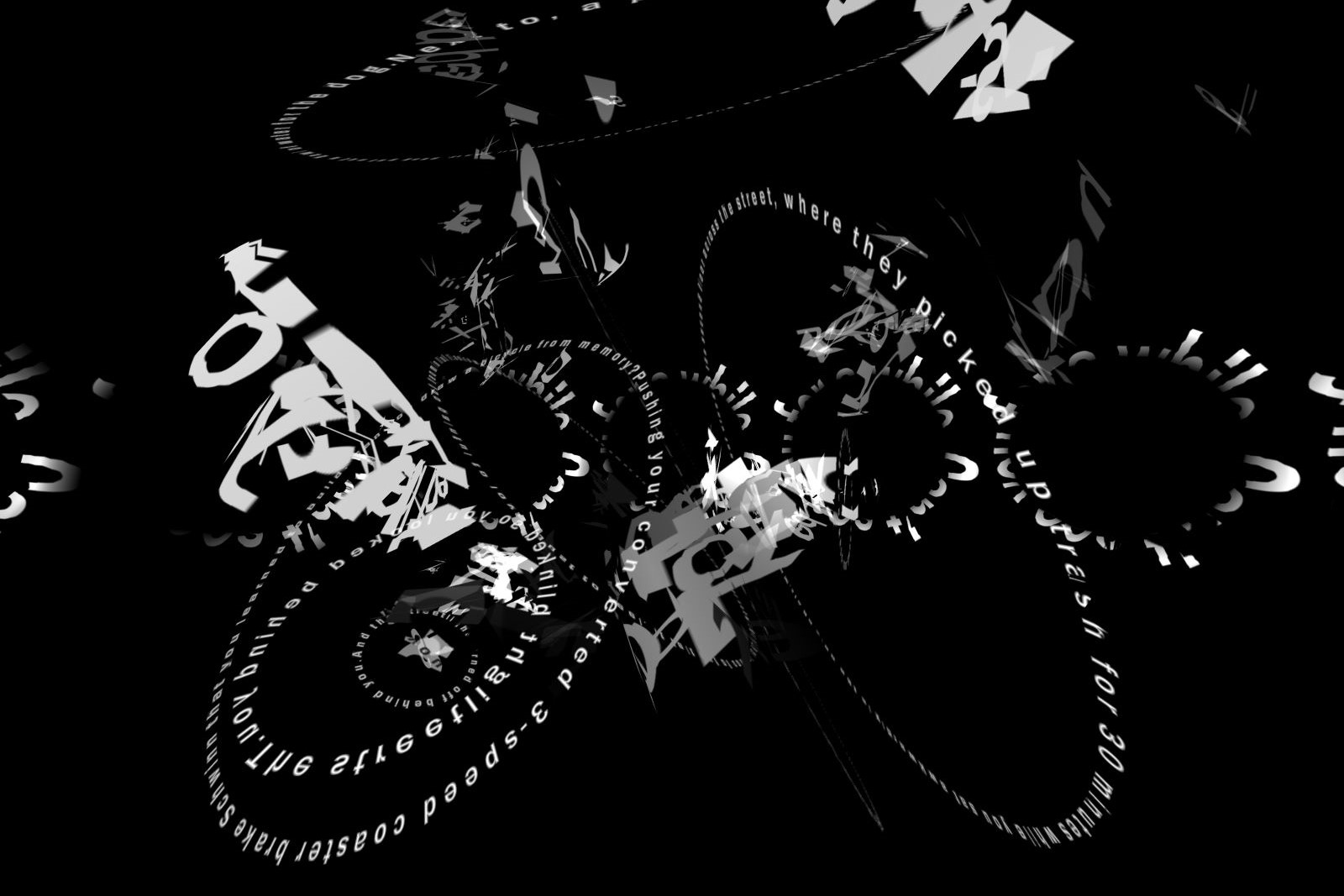
The second chapter Bike is a prose poetry about the agitation to live as if there is always an end chasing us.
        “We watch the same snowfall as
        we sigh for the passage
            of spring, of
                lakes of elusion,
                train tracks of seduction, and
                breezes of abandonment.
        And I did not have the strength to chase.”
The final chapter Wind is a poem about growing and departing from a past self.
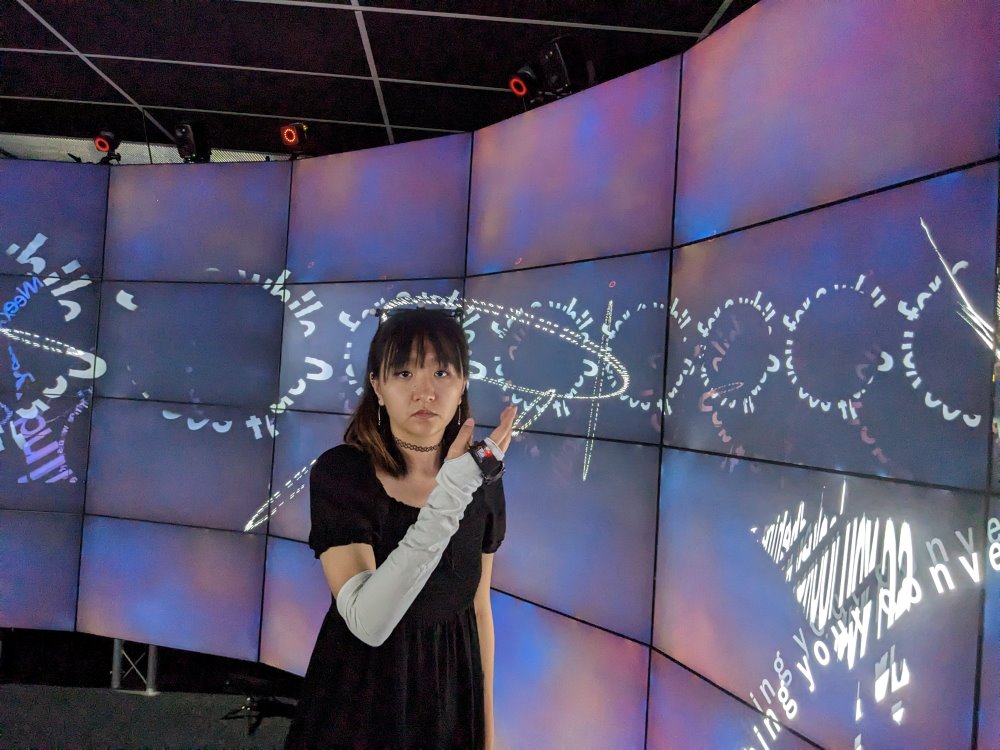
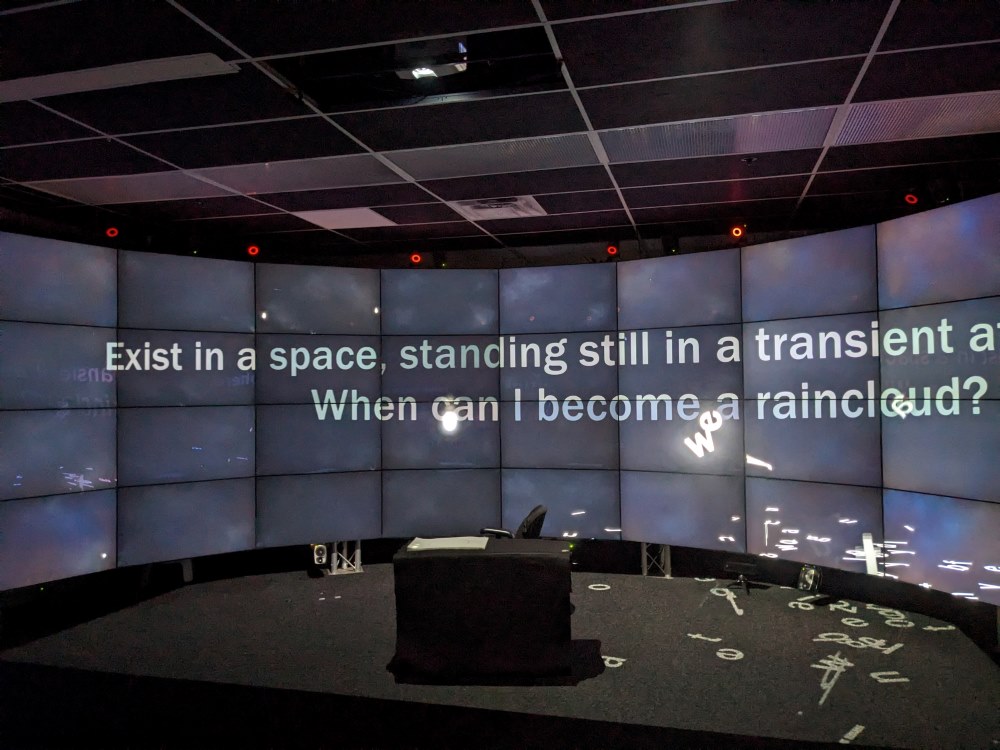
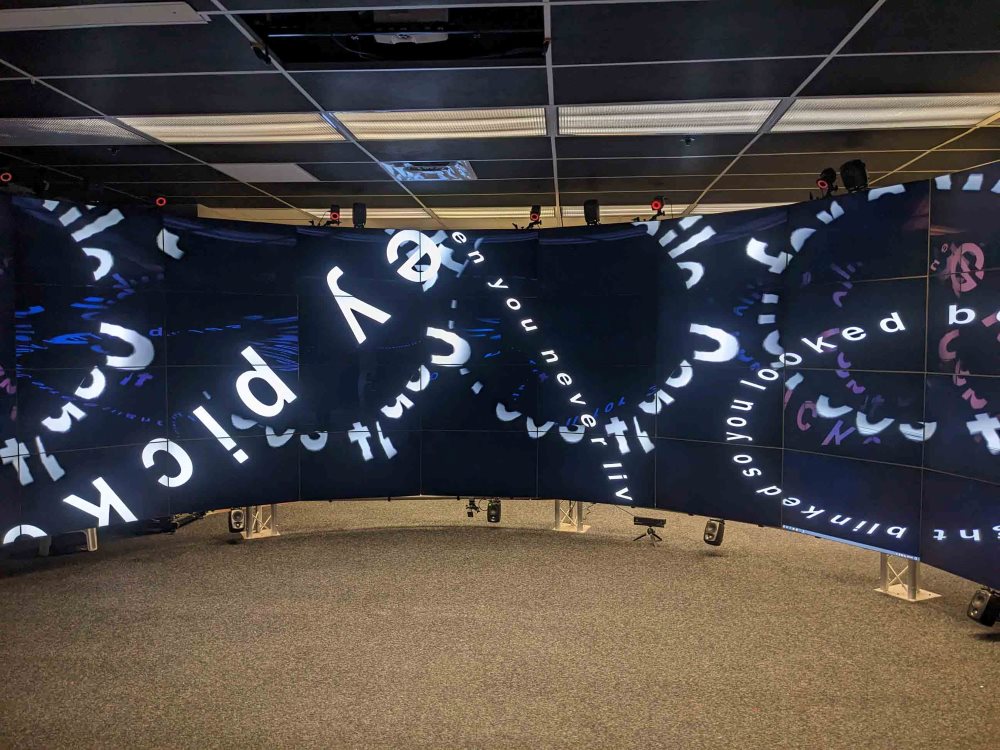
The different formats of writing give rise to the distinct styles of the three scenes, and the interactions are inspired by the titular objects. In the first chapter Cloth, paragraphs of texts are attached to fabric strips that shake with my gestures of book flipping. In the chapter Bike, short sentences are arranged into “wheels”, and my body language controls their position and rotation, leaving trails behind. In the third chapter Wind, each group of characters fall towards the floor plane, swaying with the wind force generated as I caress them.
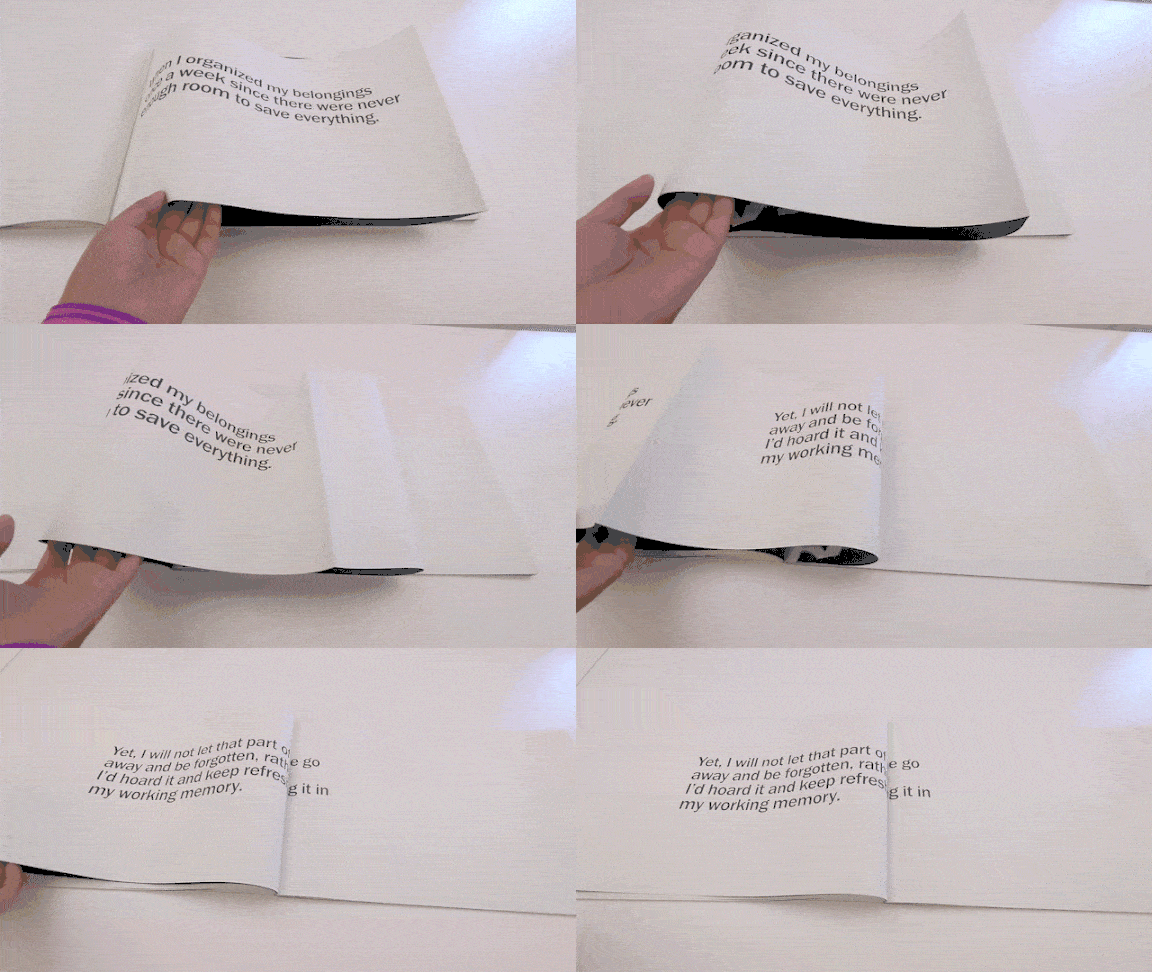
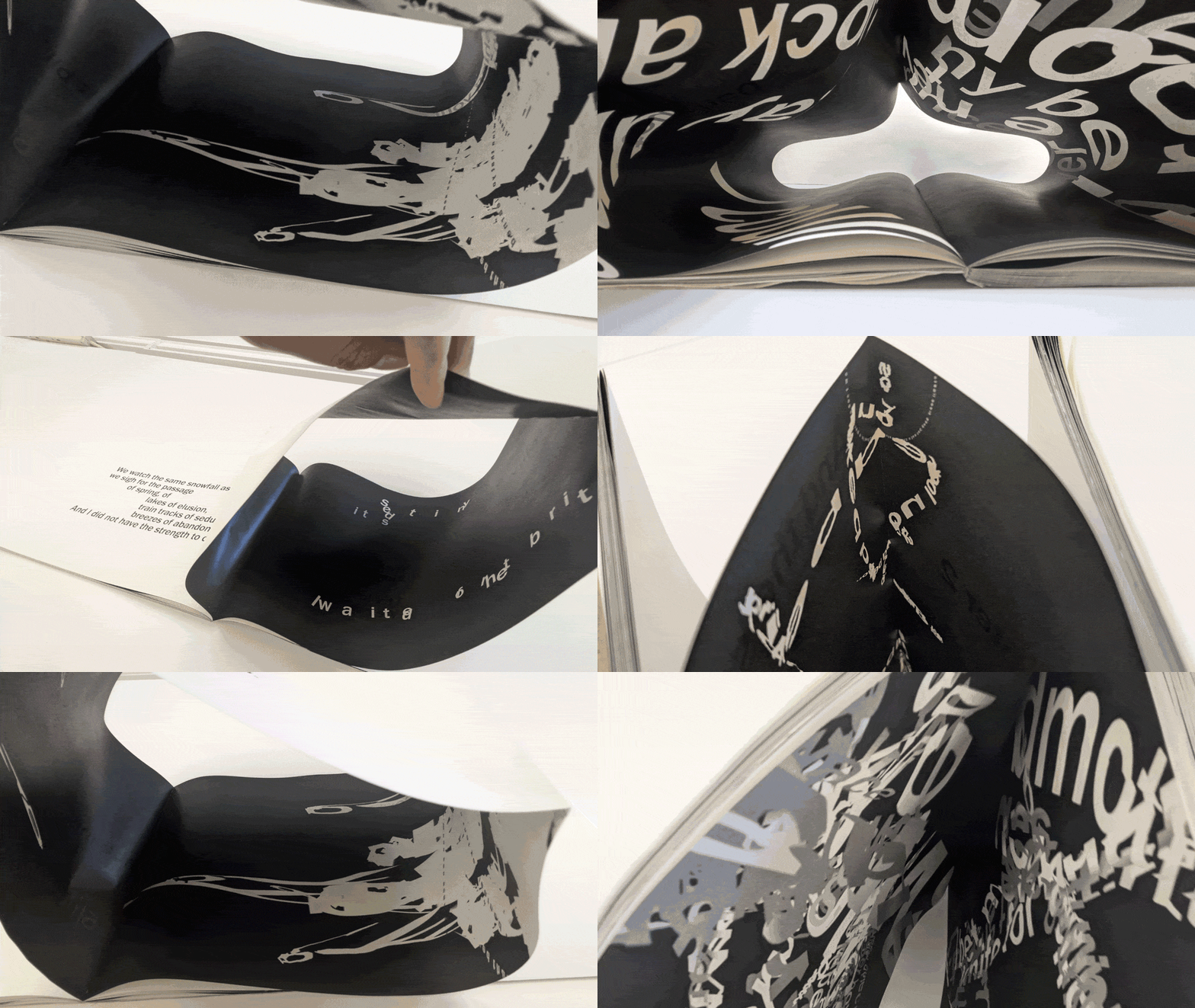
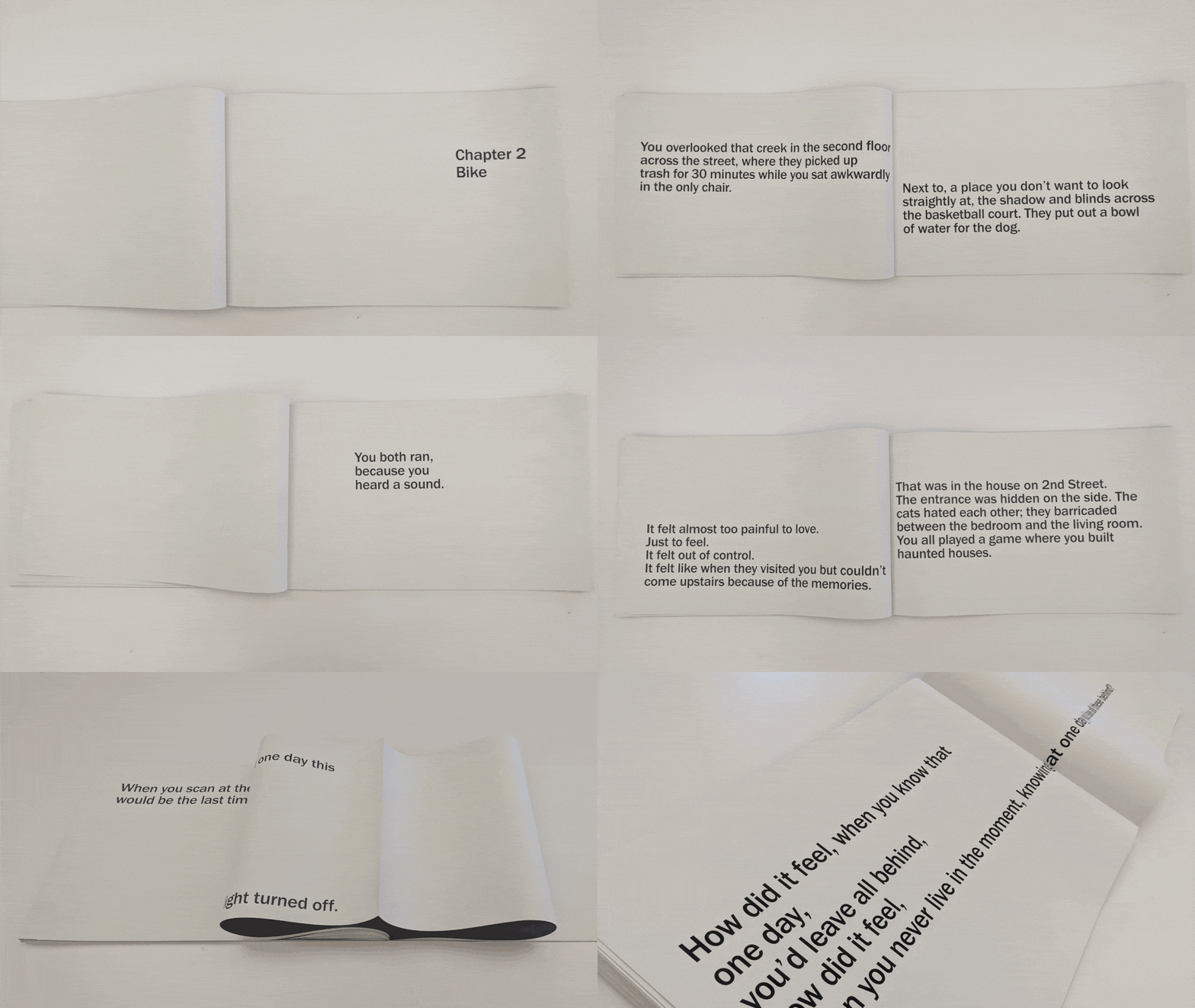
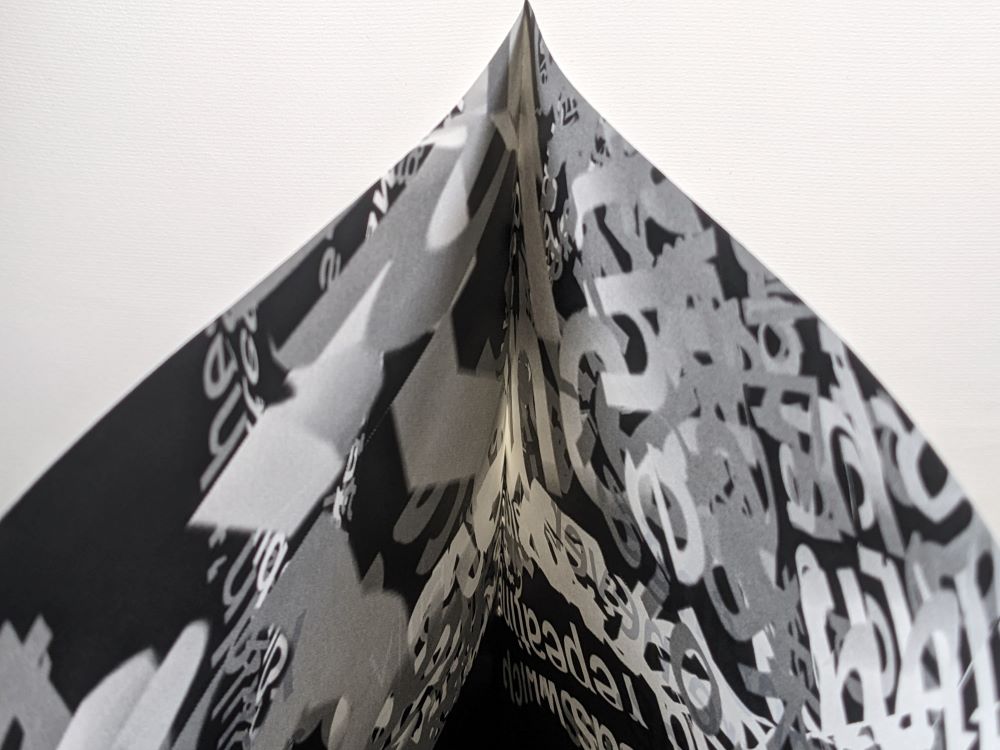
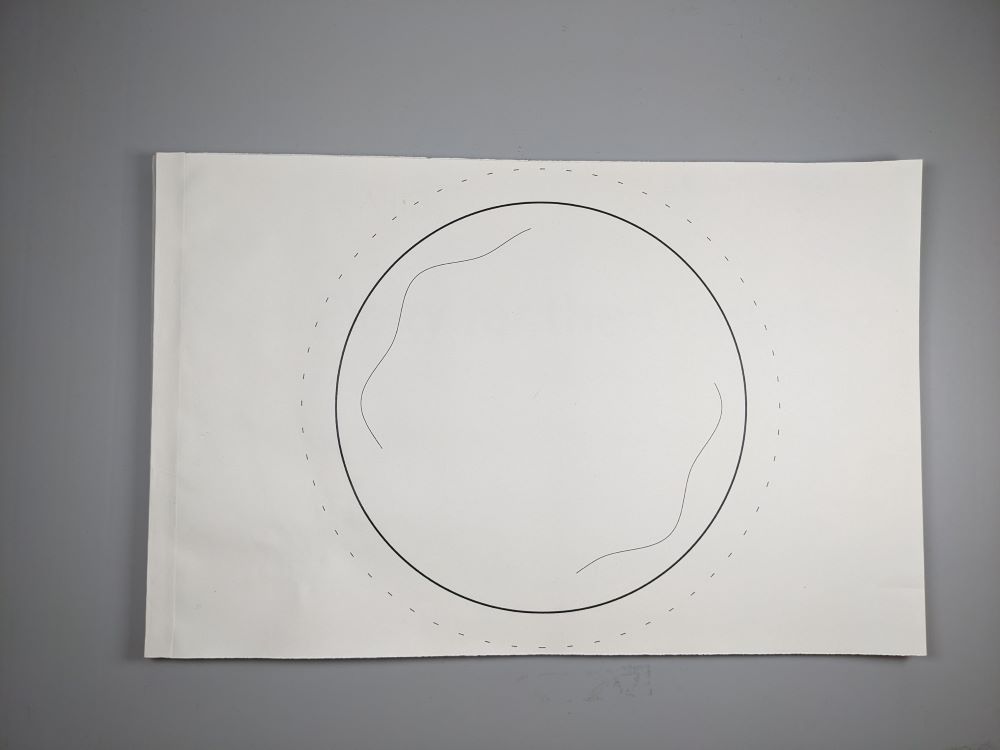
Additionally, I created a 17 by 11 landscape French-folded book, to use as a prop to aid my performance, to document the results using this interactive technology I found as a tool to create compositions, and to translate the VR experience to a book form. Focusing purely on micro-typography, the typesetting in the book corresponds to the graphics of the chapters, and the inside of the pages are images generated throughout the design process.
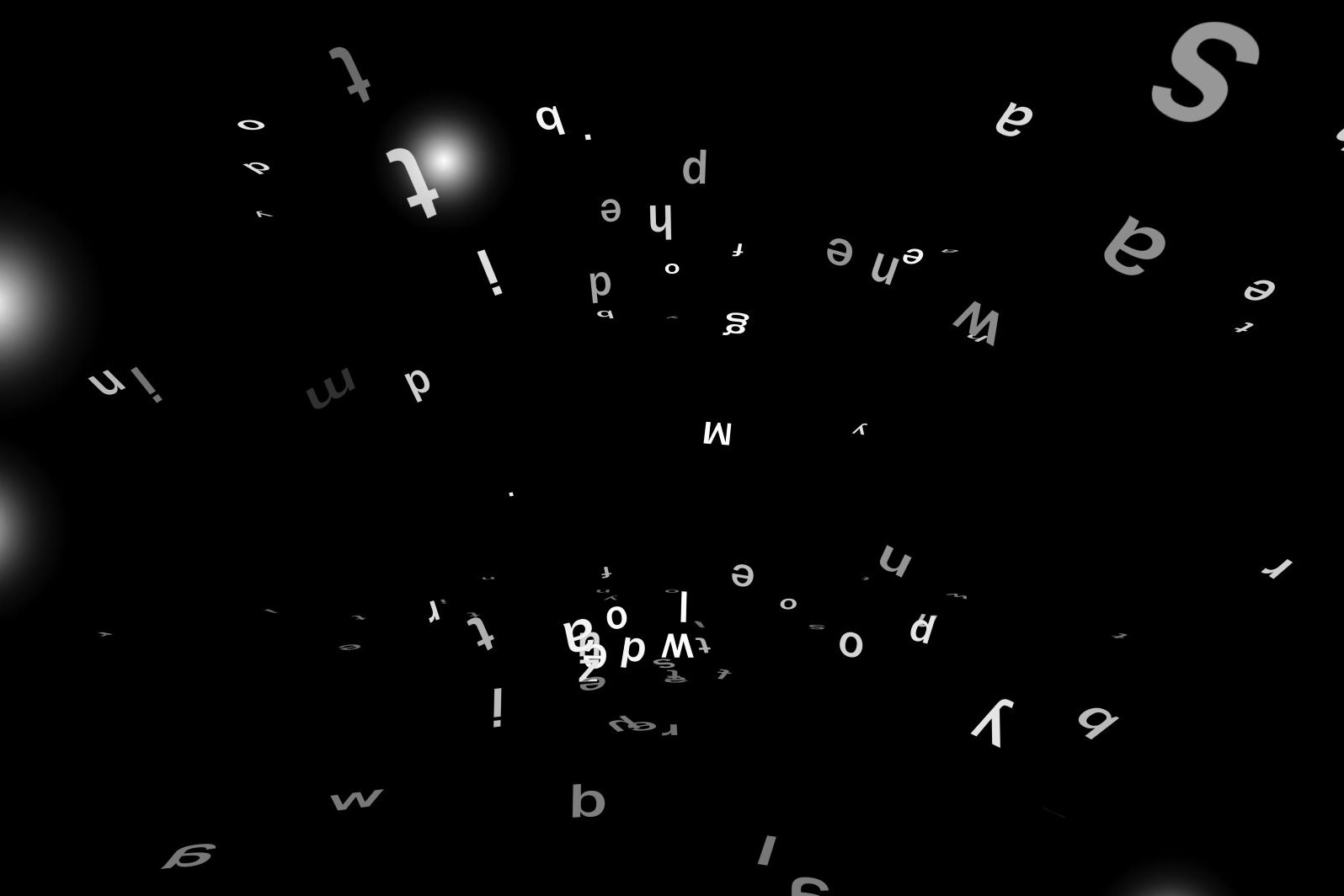
Bridging the physical body and a virtual metaphor for a body, An Elegy for the Departed is a technological experiment. What does typography in virtual reality spaces look like? How can I best use the technology to effectively tell a story?
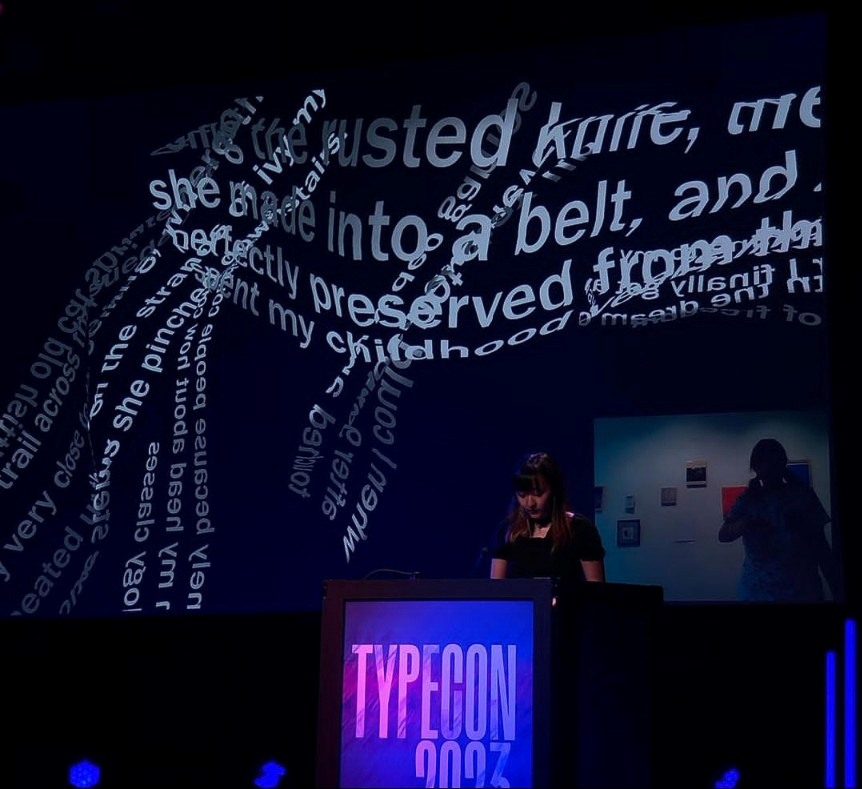
The work was performed at the CAVE2TM at the Electronic Visualization Laboratory (EVL) at the University of Illinois Chicago on May 5th, 2023, and a projector-based version was installed for the year-end show. I also presented the result at the TypeCon Education Forum in Portland on August 17th, 2023.